Understanding Intelligent Agents in AI: Key Concepts, Types, and Applications
Understanding Intelligent Agents in AI
Estimated reading time: 6 minutes
Key Takeaways
- Intelligent agents autonomously perform tasks on behalf of users or systems.
- They exhibit characteristics such as autonomy, adaptability, and goal orientation.
- Understanding their components is essential for leveraging their capabilities effectively.
- Intelligent agents can be categorized into reactive, deliberative, and hybrid types.
- Challenges like accountability and transparency are critical as their usage grows.
Table of contents
- Understanding Intelligent Agents in AI
- What is an Intelligent Agent?
- Components of Intelligent Agents
- How Do Intelligent Agents Work?
- Types of Intelligent Agents in AI
- Examples of Intelligent Agents in Artificial Intelligence
- The Role of Artificial Intelligence in Enhancing Intelligent Agents
- Challenges and Considerations in Using Intelligent Agents
- Conclusion
- Call to Action
- Frequently Asked Questions
In the ever-evolving field of artificial intelligence (AI), one term you may hear frequently is “intelligent agent in AI.” An intelligent agent is a sophisticated program that can autonomously perform tasks on behalf of users or other systems, showcasing its independence and functional capabilities. As technology advances, intelligent agents have become increasingly relevant in a multitude of AI applications, playing vital roles in enhancing efficiency and productivity across various sectors.
AI holds importance in many fields, including healthcare, finance, and transportation. With the growing reliance on intelligent agents, understanding their functions and implications is more critical than ever.
What is an Intelligent Agent?
An intelligent agent is best described as a system that can autonomously perform tasks and make decisions based on inputs from its environment. These “intelligent agents” differ significantly from traditional software agents, primarily in their adaptability and decision-making capabilities.
Key Characteristics of Intelligent Agents:
- Autonomy: Intelligent agents can operate independently without constant human intervention.
- Adaptability: They can adjust their behaviors based on changes in the environment.
- Goal-Oriented Nature: Intelligent agents are designed to pursue specific objectives.
- Reasoning and Planning: Using memory and reasoning, these agents can plan their actions effectively.
By understanding these characteristics, we can appreciate how intelligent agents leverage reasoning, planning, and memory to navigate problems and achieve their intended results. IBM on AI Agents.
Components of Intelligent Agents
To fully grasp the workings of intelligent agents, it’s essential to understand their critical components and characteristics. An intelligent agent typically encompasses:
- Perception: The ability of the agent to sense its environment or situation.
- Reasoning: How the agent analyzes information and makes informed decisions based on it.
- Learning: The capacity of the agent to enhance its performance over time by learning from past experiences.
- Acting: The execution of actions based on decisions made from reasoning processes.
These components work together to make an agent intelligent, allowing it to function effectively in a range of applications. For more in-depth knowledge, refer to Blue Prism on Intelligent Agents.
How Do Intelligent Agents Work?
Understanding the operational mechanisms of intelligent agents can shed light on their capabilities:
- Perception and Data Gathering: Intelligent agents utilize sensors to gather data from their surroundings. This data can be anything from user inputs to environmental information.
- Decision-Making Process: They analyze the collected data using data analytics and machine learning techniques. This process allows them to recognize patterns and make informed decisions.
- Action Execution: Based on the decisions, intelligent agents perform specific actions to achieve their goals, such as sending alerts, making recommendations, or controlling devices.
In summary, intelligent agents leverage both artificial intelligence and intelligent agents to enhance their decision-making capabilities, transforming how tasks are performed in various fields Google Cloud on AI Agents.
Types of Intelligent Agents in AI
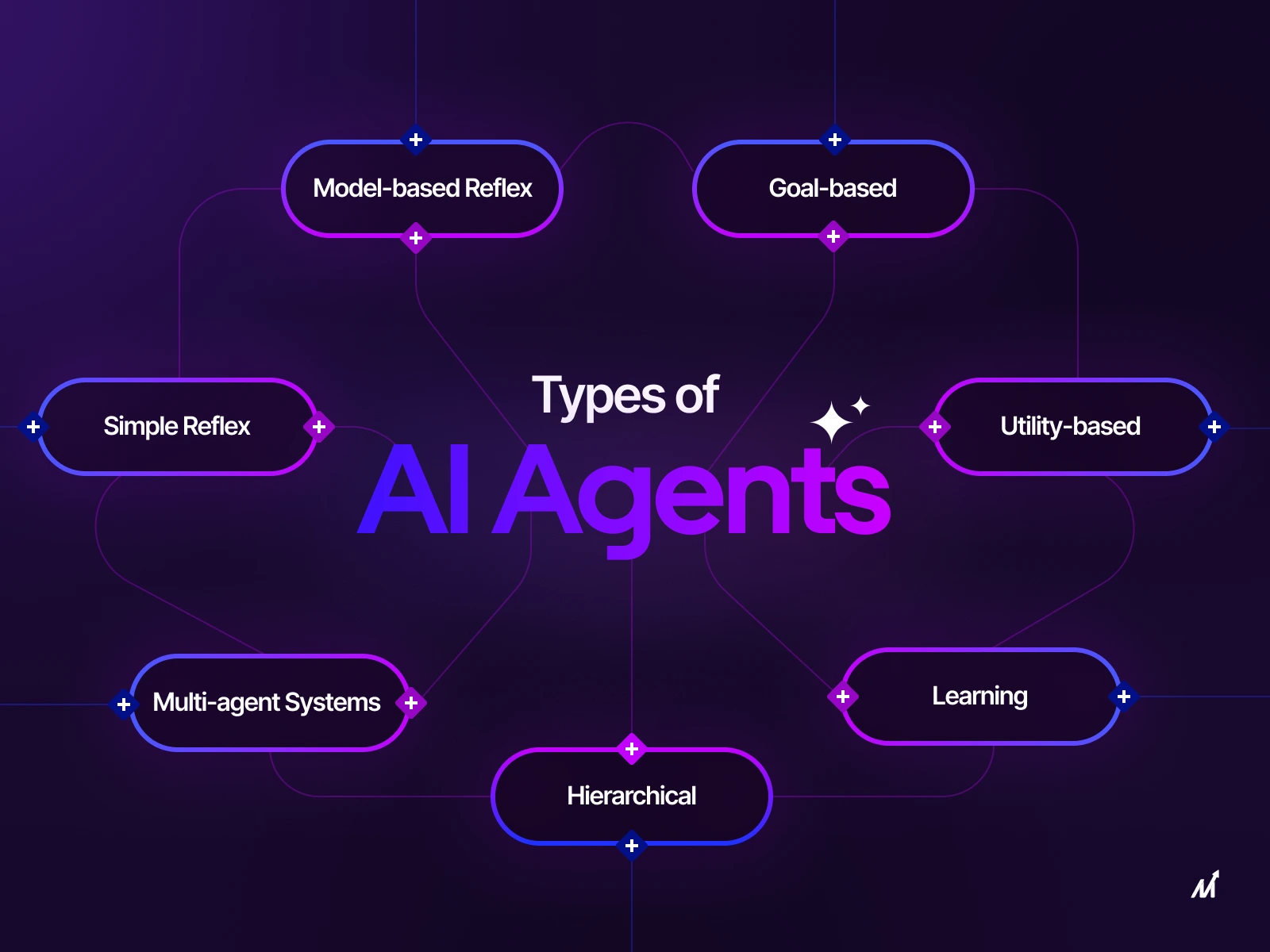
Intelligent agents can be categorized into different types, each with unique functionalities and use cases:
1. Reactive Agents
- Definition: Reactive agents respond directly to stimuli from their environments.
- Functionality: Simple and often limited to pre-defined actions based on immediate inputs.
2. Deliberative Agents
- Definition: These agents use reasoning and planning to decide on actions.
- Functionality: Deliberative agents can evaluate multiple scenarios and choose the best course of action.
3. Hybrid Agents
- Definition: Hybrid agents incorporate features from both reactive and deliberative agents.
- Functionality: They can react swiftly to immediate changes while also planning actions for the future based on past experiences.
Understanding these categories is essential to comprehend the diversity and adaptability of AI agents explained. Diving deeper into their functionalities illustrates how intelligent agents serve various purposes across industries and applications.
Examples of Intelligent Agents in Artificial Intelligence
Intelligent agents have manifested into numerous real-world technologies that many of us interact with daily. Common examples include:
- Virtual Assistants: Programs like Siri, Alexa, and Google Assistant exemplify intelligent agents, assisting users with tasks through voice commands and natural language processing.
- Recommendation Systems: Platforms like Netflix or Amazon deploy intelligent agents to analyze user preferences and make tailored content or product suggestions.
- Autonomous Vehicles: Companies like Tesla use intelligent agents to power their self-driving features, allowing vehicles to navigate dynamically in real time.
Each of these examples showcases the application of intelligent agents in artificial intelligence, demonstrating their usefulness in enhancing everyday experiences and optimizing tasks across various industries intelligent agent in artificial intelligence examples.
The Role of Artificial Intelligence in Enhancing Intelligent Agents
Artificial intelligence significantly improves the functionality of intelligent agents. Key areas of advancement include:
- Integration of Machine Learning: Intelligent agents employ machine learning algorithms that enable them to analyze data sets and learn from experiences, leading to better decision-making over time.
- Deep Learning Algorithms: The use of deep learning further enhances agents’ ability to tackle complex tasks. These advanced algorithms mimic human cognitive functions, allowing agents to reason and learn from intricate patterns in data.
Together, these advancements fortify the capabilities of artificial intelligence and intelligent agents, promoting continuous learning and efficiency in task execution. This intersection is key to the future success of intelligent agents in a rapidly changing digital landscape Blue Prism on AI Agents.
Challenges and Considerations in Using Intelligent Agents
While intelligent agents offer substantial benefits, they also present challenges and ethical considerations that must be addressed:
- Accountability: A significant question is who is responsible for the decisions made by these agents? As they operate autonomously, understanding accountability is crucial.
- Transparency: Users must be able to comprehend how decisions are made. If intelligent agents operate as “black boxes,” it could lead to distrust in their functionality.
- Security: Protecting user data and privacy becomes paramount. Ensuring that intelligent agents secure personal information is necessary to foster trust among users.
These factors are essential for responsible AI use, particularly as intelligent agents become more integrated into our daily lives and industries.
Conclusion
Intelligent agents in AI represent a significant evolution in technology, underscoring their growing importance in our increasingly digital world. As they enhance productivity and reshape various sectors, understanding how these agents operate and their implications is vital for harnessing their potential safely and effectively. We encourage readers to delve deeper into intelligent agents and their capabilities, as knowledge in this field is crucial for adapting to the future landscape of technology.
Call to Action
What are your thoughts on intelligent agents? Have you interacted with any AI technologies that you found particularly interesting? We invite you to leave a comment sharing your experiences and insights regarding intelligent agents and their implications in everyday life. Let’s discuss the exciting future ahead for intelligent agents!
Explore how multi-agent systems (MAS) and agentic AI revolutionize business operations
Discover how AI agents for working professionals can revolutionize your productivity
Discover how AI agents are revolutionizing businesses by creating new revenue streams
Discover how advanced AI agents outperform traditional SaaS
Discover ways to empower your small business using AI
Frequently Asked Questions
What are intelligent agents?
Intelligent agents are systems that autonomously perform tasks and make decisions based on environmental inputs, displaying adaptability and functional capabilities.
How do intelligent agents differ from traditional agents?
Unlike traditional software agents, intelligent agents are designed to operate independently, adapt to changes, and pursue specific goals.
What are some real-world applications of intelligent agents?
Examples include virtual assistants, recommendation systems, and autonomous vehicles that enhance user experience and improve operational efficiency.
What challenges do intelligent agents face?
Challenges include accountability for decisions, the need for transparency in operations, and ensuring the security of user data.
How does AI enhance intelligent agents?
AI improves intelligent agents by integrating machine learning and deep learning algorithms, allowing for advanced decision-making and adaptation based on user interactions and data trends.