Select Page

The Future of Business: How Multi-Agent Systems and Agentic AI are Transforming Operations

Cover Image

The Future of Business: Leveraging Multi-Agent Systems and Agentic AI

Estimated reading time: 6 minutes

Key Takeaways

  • Multi-Agent Systems (MAS) enable groups of independent agents to collaborate for complex problem-solving.
  • Agentic AI showcases independence in decision-making, improving operational efficiency.
  • Traditional automation lacks the adaptability and flexibility found in MAS and agentic AI.
  • Businesses that implement these technologies can expect gains in efficiency and cost reduction.
  • Successful transitions require addressing training needs, integration challenges, and ethical considerations.

In today’s rapidly changing business environment, understanding multi-agent systems (MAS) is crucial. MAS are systems where multiple intelligent agents interact, collaborate, and communicate to solve problems or accomplish tasks collectively. Integrating agentic AI into modern business is not just a trend; it represents a transformative shift in efficiency, adaptability, and decision-making.

This blog post explores how agentic AI distinguishes itself from traditional automation. It dives deep into the capabilities that enable businesses to tackle complex challenges and enhances adaptability in their operations. Let’s embark on this journey to understand the impact of these technologies on business operations.

Understanding Traditional Automation

What is Traditional Automation?

Traditional automation refers to the use of technology to perform predefined tasks without human involvement. This type of automation is common in various industries, particularly in manufacturing and repetitive processes.

  • Applications of Traditional Automation:

    – Assembly lines in factories: Machines perform tasks such as welding, painting, and packaging.

    – Data entry tasks: Automation tools handle repetitive data input, reducing human error.

Limitations of Traditional Automation

While traditional automation offers efficiency for simple tasks, it has notable limitations:

  • Inability to Adapt: Traditional systems operate based on predefined rules and struggle to handle unexpected changes or complexities.
  • Lack of Flexibility: These systems lack the adaptability present in advanced technological systems, making it difficult to pivot in response to new challenges.

Understanding these limitations is crucial for businesses looking to improve operational efficiency and responsiveness. More on traditional automation can be found here: IBM on Automation.

Introduction to Multi-Agent Systems (MAS)

What are Multi-Agent Systems?

Multi-agent systems (MAS) take collaboration to the next level. These systems consist of autonomous agents that interact and collaborate to achieve common objectives. Their architecture allows for greater resilience and efficiency in complex environments.

Key Characteristics of MAS

  • Autonomy: Each agent within the system operates independently, making decisions based on its own set of rules and goals.
  • Communication: Agents can share information with one another, enhancing collective decision-making.
  • Collaboration: By working together, agents can solve problems that are too complex for a single entity to tackle alone.

Examples of Multi-Agent Systems

MAS can be observed across various industries:

  • Logistics: Supply chain optimization through self-organizing delivery systems enables companies to streamline operations.
  • Finance: Algorithmic trading platforms utilize MAS to analyze market trends and execute trades autonomously.
  • Manufacturing: Smart factories employ MAS to enhance production efficiency and flexibility.

For more information on multi-agent systems, check out this article: Google Cloud on AI Agents.

What is Agentic AI?

Defining Agentic AI

Agentic AI represents a sophisticated evolution of artificial intelligence. It embodies multiple intelligent agents capable of independent decision-making, working to solve complex problems in real-time.

Core Capabilities of Agentic AI

  • Learning from Experiences: Agentic AI has the capacity to learn from past experiences, improving its effectiveness over time.
  • Adaptive Behavior: It can adjust its strategies based on real-time data and environmental changes.
  • Real-Time Decision-Making: The ability to make informed decisions instantaneously is crucial for navigating today’s fast-paced markets.

Traditional AI vs. Agentic AI

The distinction between traditional AI and agentic AI is salient:

  • Operational Independence: While traditional AI may rely on human input, agentic AI operates with a degree of autonomy rarely found in older systems.
  • Continuous Improvement: Agentic AI continually refines its processes based on new information, enhancing its effectiveness in business applications.

For more in-depth insights, visit: Blue Prism on Intelligent Agents.

Comparing Agentic AI and Traditional Automation

Adaptability

  • Agentic AI: Adjusts to new conditions and scenarios, leveraging its learning capabilities.
  • Traditional Automation: Functions strictly within the confines of predefined rules, struggling to adapt to unforeseen changes.

Complex Problem Solving

  • Agentic AI: Tackles intricate challenges through collaboration among agents who can analyze data and devise strategies together.
  • Traditional Automation: Primarily executes tasks without the ability to engage in complex reasoning or multidimensional problem-solving.

Scalability

  • Agentic AI: Excels in scaling operations dynamically, making it suitable for environments characterized by rapid change.
  • Traditional Automation: Often exhibits rigidity in scaling, unable to pivot quickly in response to varying demands.

For a comprehensive comparison, visit: AWS on AI Agents.

Revolutionizing Business Operations with MAS and Agentic AI

Real-World Case Studies

Numerous businesses have successfully implemented MAS and agentic AI, leading to notable improvements over traditional automation systems:

  • In E-commerce, companies utilize self-organizing delivery systems to manage logistics efficiently. This reduces delivery time and costs significantly, demonstrating the power of MAS in streamlining operations.
  • In Finance, smart trading platforms that adapt to market trends illustrate the advantages of agentic AI in making real-time, informed decisions, optimizing investment outcomes.

Benefits of Implementing MAS and Agentic AI

Businesses that adopt these advanced technologies can enjoy:

  • Improved Efficiency: Processes become faster and more effective, minimizing waste and downtime.
  • Reduced Costs: Enhanced automation can help cut operational costs significantly.
  • Enhanced Decision-Making: With real-time data analysis and adaptable systems, organizations make better-informed decisions swiftly.

As businesses transition to dynamic, self-organizing systems, the competitive edge gained through MAS and agentic AI is undeniable. More on the impact of these technologies is outlined here: GeeksforGeeks on Artificial Intelligence.

Challenges and Considerations

Transitioning to Agentic AI and MAS

While the potential rewards of agentic AI and MAS are substantial, businesses may face several challenges during implementation:

  • Training Needs: Proper education and training are vital for teams to harness these advanced technologies effectively.
  • Integration Difficulties: Aligning new systems with existing frameworks can pose difficulties, potentially hindering the transition.
  • Ethical Implications: Autonomous decision-making raises questions regarding accountability and ethical considerations in operations.

Strategies for Overcoming Challenges

To navigate these challenges, companies can adopt several strategies:

  • Phased Implementation: Gradual introduction of technologies allows for easier adaptation and troubleshooting.
  • Continuous Education and Training: Ongoing training programs will equip teams with necessary skills to manage and optimize these systems.

These strategies provide a pathway to successfully integrating agentic AI and MAS into business operations. For more strategies, refer to IBM on AI Agents.

Conclusion

The emergence of multi-agent systems and agentic AI is reshaping the business landscape, driving improvements in adaptability and complex problem-solving capabilities. As these technologies continue to evolve, businesses must explore their potential to remain competitive in the changing market landscape.

To stay ahead, consider diving deeper into these technologies. You may want to consult with experts in the field or explore related resources to discover how to implement MAS and agentic AI in your operations. Embrace the future and redefine your business strategies today.

Feel free to check back for more insights and learn how your organization can leverage these advanced systems to thrive in an ever-evolving environment!
Understanding Intelligent Agents in AI: Key Concepts, Types, and Applications

Cover Image

Understanding Intelligent Agents in AI

Estimated reading time: 6 minutes

Key Takeaways

  • Intelligent agents autonomously perform tasks on behalf of users or systems.
  • They exhibit characteristics such as autonomy, adaptability, and goal orientation.
  • Understanding their components is essential for leveraging their capabilities effectively.
  • Intelligent agents can be categorized into reactive, deliberative, and hybrid types.
  • Challenges like accountability and transparency are critical as their usage grows.

In the ever-evolving field of artificial intelligence (AI), one term you may hear frequently is “intelligent agent in AI.” An intelligent agent is a sophisticated program that can autonomously perform tasks on behalf of users or other systems, showcasing its independence and functional capabilities. As technology advances, intelligent agents have become increasingly relevant in a multitude of AI applications, playing vital roles in enhancing efficiency and productivity across various sectors.

AI holds importance in many fields, including healthcare, finance, and transportation. With the growing reliance on intelligent agents, understanding their functions and implications is more critical than ever.

What is an Intelligent Agent?

An intelligent agent is best described as a system that can autonomously perform tasks and make decisions based on inputs from its environment. These “intelligent agents” differ significantly from traditional software agents, primarily in their adaptability and decision-making capabilities.

Key Characteristics of Intelligent Agents:

  • Autonomy: Intelligent agents can operate independently without constant human intervention.
  • Adaptability: They can adjust their behaviors based on changes in the environment.
  • Goal-Oriented Nature: Intelligent agents are designed to pursue specific objectives.
  • Reasoning and Planning: Using memory and reasoning, these agents can plan their actions effectively.

By understanding these characteristics, we can appreciate how intelligent agents leverage reasoning, planning, and memory to navigate problems and achieve their intended results. IBM on AI Agents.

Components of Intelligent Agents

To fully grasp the workings of intelligent agents, it’s essential to understand their critical components and characteristics. An intelligent agent typically encompasses:

  • Perception: The ability of the agent to sense its environment or situation.
  • Reasoning: How the agent analyzes information and makes informed decisions based on it.
  • Learning: The capacity of the agent to enhance its performance over time by learning from past experiences.
  • Acting: The execution of actions based on decisions made from reasoning processes.

These components work together to make an agent intelligent, allowing it to function effectively in a range of applications. For more in-depth knowledge, refer to Blue Prism on Intelligent Agents.

How Do Intelligent Agents Work?

Understanding the operational mechanisms of intelligent agents can shed light on their capabilities:

  • Perception and Data Gathering: Intelligent agents utilize sensors to gather data from their surroundings. This data can be anything from user inputs to environmental information.
  • Decision-Making Process: They analyze the collected data using data analytics and machine learning techniques. This process allows them to recognize patterns and make informed decisions.
  • Action Execution: Based on the decisions, intelligent agents perform specific actions to achieve their goals, such as sending alerts, making recommendations, or controlling devices.

In summary, intelligent agents leverage both artificial intelligence and intelligent agents to enhance their decision-making capabilities, transforming how tasks are performed in various fields Google Cloud on AI Agents.

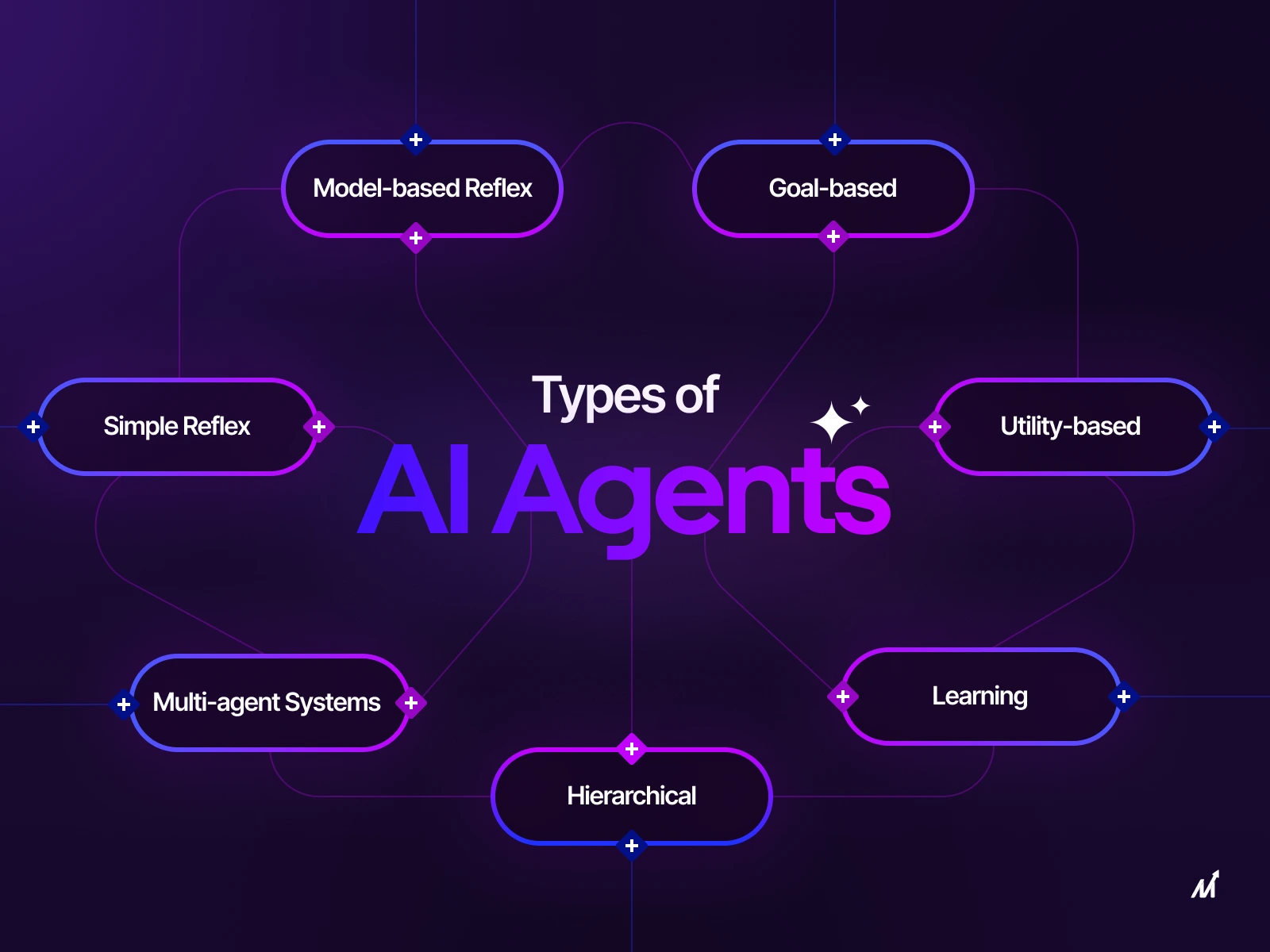
Types of Intelligent Agents in AI

Intelligent agents can be categorized into different types, each with unique functionalities and use cases:

1. Reactive Agents

  • Definition: Reactive agents respond directly to stimuli from their environments.
  • Functionality: Simple and often limited to pre-defined actions based on immediate inputs.

2. Deliberative Agents

  • Definition: These agents use reasoning and planning to decide on actions.
  • Functionality: Deliberative agents can evaluate multiple scenarios and choose the best course of action.

3. Hybrid Agents

  • Definition: Hybrid agents incorporate features from both reactive and deliberative agents.
  • Functionality: They can react swiftly to immediate changes while also planning actions for the future based on past experiences.

Understanding these categories is essential to comprehend the diversity and adaptability of AI agents explained. Diving deeper into their functionalities illustrates how intelligent agents serve various purposes across industries and applications.

Examples of Intelligent Agents in Artificial Intelligence

Intelligent agents have manifested into numerous real-world technologies that many of us interact with daily. Common examples include:

  • Virtual Assistants: Programs like Siri, Alexa, and Google Assistant exemplify intelligent agents, assisting users with tasks through voice commands and natural language processing.
  • Recommendation Systems: Platforms like Netflix or Amazon deploy intelligent agents to analyze user preferences and make tailored content or product suggestions.
  • Autonomous Vehicles: Companies like Tesla use intelligent agents to power their self-driving features, allowing vehicles to navigate dynamically in real time.

Each of these examples showcases the application of intelligent agents in artificial intelligence, demonstrating their usefulness in enhancing everyday experiences and optimizing tasks across various industries intelligent agent in artificial intelligence examples.

The Role of Artificial Intelligence in Enhancing Intelligent Agents

Artificial intelligence significantly improves the functionality of intelligent agents. Key areas of advancement include:

  • Integration of Machine Learning: Intelligent agents employ machine learning algorithms that enable them to analyze data sets and learn from experiences, leading to better decision-making over time.
  • Deep Learning Algorithms: The use of deep learning further enhances agents’ ability to tackle complex tasks. These advanced algorithms mimic human cognitive functions, allowing agents to reason and learn from intricate patterns in data.

Together, these advancements fortify the capabilities of artificial intelligence and intelligent agents, promoting continuous learning and efficiency in task execution. This intersection is key to the future success of intelligent agents in a rapidly changing digital landscape Blue Prism on AI Agents.

Challenges and Considerations in Using Intelligent Agents

While intelligent agents offer substantial benefits, they also present challenges and ethical considerations that must be addressed:

  • Accountability: A significant question is who is responsible for the decisions made by these agents? As they operate autonomously, understanding accountability is crucial.
  • Transparency: Users must be able to comprehend how decisions are made. If intelligent agents operate as “black boxes,” it could lead to distrust in their functionality.
  • Security: Protecting user data and privacy becomes paramount. Ensuring that intelligent agents secure personal information is necessary to foster trust among users.

These factors are essential for responsible AI use, particularly as intelligent agents become more integrated into our daily lives and industries.

Conclusion

Intelligent agents in AI represent a significant evolution in technology, underscoring their growing importance in our increasingly digital world. As they enhance productivity and reshape various sectors, understanding how these agents operate and their implications is vital for harnessing their potential safely and effectively. We encourage readers to delve deeper into intelligent agents and their capabilities, as knowledge in this field is crucial for adapting to the future landscape of technology.

Call to Action

What are your thoughts on intelligent agents? Have you interacted with any AI technologies that you found particularly interesting? We invite you to leave a comment sharing your experiences and insights regarding intelligent agents and their implications in everyday life. Let’s discuss the exciting future ahead for intelligent agents!

Explore how multi-agent systems (MAS) and agentic AI revolutionize business operations

Discover how AI agents for working professionals can revolutionize your productivity

Discover how AI agents are revolutionizing businesses by creating new revenue streams

Discover how advanced AI agents outperform traditional SaaS

Discover ways to empower your small business using AI

Frequently Asked Questions

What are intelligent agents?

Intelligent agents are systems that autonomously perform tasks and make decisions based on environmental inputs, displaying adaptability and functional capabilities.

How do intelligent agents differ from traditional agents?

Unlike traditional software agents, intelligent agents are designed to operate independently, adapt to changes, and pursue specific goals.

What are some real-world applications of intelligent agents?

Examples include virtual assistants, recommendation systems, and autonomous vehicles that enhance user experience and improve operational efficiency.

What challenges do intelligent agents face?

Challenges include accountability for decisions, the need for transparency in operations, and ensuring the security of user data.

How does AI enhance intelligent agents?

AI improves intelligent agents by integrating machine learning and deep learning algorithms, allowing for advanced decision-making and adaptation based on user interactions and data trends.

Leads: The Backbone of B2B Success for Small Businesses

Cover Image

Leads: The Backbone of B2B Success for Small Businesses

Estimated reading time: 6 minutes

Key Takeaways

  • Leads are essential for *filling sales pipelines* and driving revenue.
  • Understanding the distinction between MQLs and SQLs is critical for success.
  • Adopting **AI technology** enhances lead generation strategies for small businesses.
  • Modern lead generation techniques prioritize *data-driven* insights and *personalization*.
  • Collaborating with **AI agencies** can optimize lead generation efforts significantly.

Table of Contents

Introduction

**Leads** play a vital role in the world of B2B (business-to-business) sales. They are potential business customers identified and attracted through targeted processes. For small businesses, leads are crucial as they help fill sales pipelines and drive revenue. In an era where competition is fierce, understanding and effectively generating leads can make the difference between stagnation and growth.

As we approach 2026, **AI technology** is revolutionizing lead generation. The automation of qualification, personalization, and outreach processes allows small businesses to compete effectively in the market. By leveraging advancements in technology, businesses can improve their lead-generation strategies, closing the gap between them and larger competitors. For more insights on lead generation, you can check out SmartE, Monday, and Utilizing AI to Empower Small Business.

Understanding Leads in the B2B Landscape

Types of Leads

In the B2B landscape, we can categorize leads into two main types: **Marketing Qualified Leads (MQLs)** and **Sales Qualified Leads (SQLs)**.

  • **Marketing Qualified Leads (MQLs)**: These are prospects who show interest in your product or service by engaging with your content. This engagement could be through downloading an eBook, signing up for a webinar, or interacting with your social media.
  • **Sales Qualified Leads (SQLs)**: SQLs are leads that have been vetted for criteria such as budget, authority, need, and timeline before being passed to the sales team. Essentially, SQLs are more likely to convert into paying customers.

Understanding these distinctions is crucial for tailoring your marketing and sales strategies effectively. For more details about MQLs and SQLs, check Monday’s insights here and Foleon.

Significance of Leads

For **small businesses**, having a steady stream of leads is vital. Leads facilitate:

  • **Consistent Revenue Streams**: Predictable revenue is essential for sustaining and growing a business.
  • **Forecasting Accuracy**: Small businesses can achieve revenue forecasting accuracy within 10-15% when they have a systematic lead generation process.
  • **Business Growth**: Effective lead generation allows small businesses to grow without proportionally increasing their sales staff.

Without a clear strategy for generating leads, small businesses risk hitting a growth ceiling. For a deeper understanding of why leads matter, visit SmartE’s detailed guide and Lead Generation for B2B using AI and available resources.

The Evolution of Lead Generation Techniques

Traditional vs. Modern Techniques

Traditionally, lead generation involved methods like cold calls, direct mail, and relying on walk-ins. These approaches often yielded inconsistent results and required significant manpower.

In contrast, modern techniques are:

  • **Data-Driven**: Using data analytics to identify target demographics and tailor messaging accordingly.
  • **Aligned with Buyer Journey**: Understanding the sales cycle and addressing potential buyers’ needs at each stage.
  • **Multichannel**: Engaging prospects through various platforms such as email, social media, and content marketing.

The shift from traditional to modern methods has transformed how businesses engage potential customers. For comprehensive comparisons, see Monday’s article and Three29’s insights.

Role of AI

AI has significantly changed the landscape of lead generation. It enhances technology by enabling:

  • **Automated Lead Scoring**: Evaluating leads based on engagement and behavioral patterns, allowing businesses to focus on the most promising prospects.
  • **Lead Enrichment**: Automatically gathering and updating lead information from various sources to create a more comprehensive profile.
  • **Personalized Outreach**: Sending tailored messaging to leads, increasing the chances of conversion.

This evolution empowers businesses to optimize their lead generation processes. To explore how AI is transforming this field, visit Monday’s article and AI Agents: Transforming Businesses to Create New Revenue Streams.

Leveraging AI for Lead Generation

Automation Benefits

AI offers numerous automation advantages for lead generation:

  • **Lead Qualification**: AI systems can quickly assess leads, saving time for sales teams.
  • **Data Extraction**: Extracting relevant data from written documents, forms, or even emails minimizes manual data entry.
  • **Follow-Ups**: Automating follow-up sequences ensures that leads receive timely communication, increasing the chances of conversion.

These advantages lead to shorter sales cycles and improved close rates. For more on how AI is beneficial in this respect, check out Monday’s insights.

Tools and Technologies

For small businesses looking to tap into the benefits of AI in lead generation, various tools exist:

  • **n8n**: A powerful automation tool that can streamline workflows and improve efficiency in lead generation activities.
  • **AI-Powered CRM Platforms**: Tools that come equipped with built-in AI features for lead scoring and data enrichment help businesses optimize their strategies.
  • **Autonomous AI Agents**: Emerging technologies include fully automated agents to help with targeting and marketing tasks.

These tools enable businesses to maximize their lead generation efforts. For detailed guidance on these tools, refer to Monday.

The Role of AI Agencies in B2B Lead Generation

Capabilities of AI Agencies

**AI agencies** focus on deploying advanced tools to help businesses improve their lead generation processes. Their capabilities include:

  • **Lead Scoring**: Helping businesses identify which leads are the most likely to convert.
  • **Campaign Optimization**: Fine-tuning marketing campaigns through continuous performance analysis and adjustments.
  • **Cost Reduction**: Lowering customer acquisition costs (CAC) by improving targeting and engagement strategies.

Utilizing the specialized expertise of AI agencies can be a game-changer for small businesses. For additional insights, check out Monday’s article and AI Agents for Working Professionals: Enhance Productivity Through Automation.

Case Studies

To illustrate the effectiveness of AI agencies, consider successful case studies where businesses witnessed dramatic improvements in lead generation metrics. Companies employing behavior-based marketing strategies reported substantial increases in engagement and conversion rates.

Focusing on specific sectors, AI agencies have illustrated how targeted campaigns can nurture leads from initial interest all the way to conversion, leading to measurable results. For more examples of successful campaigns, visit Three29.

Implementing Technology for Better Leads in 2026

Future Predictions

As we look towards **2026**, the future of lead generation is set to evolve even further. We can anticipate:

  • **Autonomous AI Agents**: These agents will enhance workflows, providing hyper-targeted engagement and consistent communications.
  • **Trust-Building Strategies**: Businesses will leverage clarity and timing to build trust with potential customers, making the sales process smoother.

This evolution will likely shift how businesses think about lead generation entirely. For a deeper insight into these predictions, visit Ironpaper and Small Business Software Trends for 2026.

Staying ahead means being aware of emerging trends, such as:

  • **AI-Driven Retargeting**: Utilizing past data to recapture customer interest through tailored messaging.
  • **Visually Intuitive Pipeline Tools**: Tools that allow businesses to view their sales pipeline in clear, easy-to-understand formats.

Understanding and implementing these trends will be critical for small businesses looking to thrive in the upcoming landscape. Refer to Monday’s article for deeper insights.

Best Practices for Small Businesses to Generate Leads

Sales and Marketing Alignment

Aligning **sales and marketing teams** is essential in generating high-quality leads. Businesses should focus on:

  • Clear definitions of what constitutes a lead.
  • Streamlined handoff processes between teams.
  • Consistent metrics used by both departments.

This alignment ensures that leads progress smoothly through the pipeline. For more insights on this best practice, check out Monday and Three29.

Targeting Strategies

To enhance lead generation efforts, small businesses should prioritize:

  • **Customer Personas**: Creating detailed profiles of ideal customers to tailor marketing efforts effectively.
  • **Intent-Based Targeting**: Focusing on leads that show clear buying signals, increasing the likelihood of conversion.

By prioritizing quality over quantity, businesses can improve ROI and streamline their marketing efforts. For further details, you can visit Three29.

AI for Nurturing

Implementing AI in nurturing leads can yield significant benefits:

  • **Personalized Emails**: Automation can help create targeted email sequences tailored to the unique needs of different segments of leads.
  • **Rapid Follow-Up**: AI can help ensure no lead is left unattended, increasing the chances of conversion.

These strategies are particularly helpful in maintaining engagement throughout the sales funnel.

CRM Dashboard Utilization

Utilizing **CRM dashboards** allows small businesses to:

  • Gain visibility into their sales pipeline.
  • Automate lead enrichment to reduce manual work.
  • Enhance forecasting to improve decision-making.

Effective use of CRM tools enhances the lead-generation process significantly. For more on this, check out Monday’s insights.

Conclusion

In conclusion, the integration of **AI** into **B2B lead generation** processes equips small businesses with a structured approach to grow and maintain predictable revenue streams. As we prepare for 2026, the continuing evolution of lead generation techniques—powered by technology—demonstrates the potential for small businesses to thrive in competitive markets. For a comprehensive guide, refer to SmartE, Monday, and AI Agents: Transforming Businesses to Create New Revenue Streams.

Call to Action

If you’re ready to elevate your lead generation strategies, explore tools like **n8n** for automation. Consider partnerships with **AI agencies** to access specialized knowledge and resources that will enhance your lead generation efforts. Start refining your strategy today to position your small business for success in 2026 and beyond.

This blog post has provided a thorough overview of leads in the B2B context, emphasizing their relevance for small businesses while integrating cutting-edge AI technology. The sections aimed to present clear definitions, historical context, modern techniques, future predictions, and actionable practices that business professionals can utilize to advance their understanding of leads and leverage AI successfully.

AI for Small Business: Leveraging Automation and Insights for Growth on a Limited Budget

Cover Image

AI for Small Business: How Automation and Insights Drive Growth on a Small Budget

Estimated reading time: 7 minutes

Key Takeaways

  • AI leverages machine learning and predictive analytics for better decision-making.
  • Automation through AI can save time, reduce costs, and increase productivity.
  • AI-driven insights help in tailoring marketing strategies and enhancing customer experiences.
  • Starting small with AI solutions can yield significant returns on investment.
  • Understanding future trends is essential for maintaining competitiveness.

Understanding AI and Its Benefits for Small Business

To appreciate the advantages of AI for small businesses, it’s crucial to have a grasp of how AI technology operates. At its core, AI leverages concepts like machine learning and predictive analytics. Machine learning allows computers to learn from data and improve their performance over time, while predictive analytics helps forecast future trends based on historical data.

The main benefits of AI for small businesses include:

  • Cost Efficiency and Time Savings: Automating repetitive tasks can save labor hours and reduce operational costs. Businesses can reallocate human resources to higher-value tasks, significantly impacting their overall efficiency. [Source]
  • Improved Decision-Making: AI can rapidly analyze customer and sales data, enabling businesses to make informed decisions that lead to better outcomes. The ability to spot trends quickly provides a strategic advantage. [Source]
  • Enhanced Customer Experience: AI-powered tools deliver personalized shopping experiences and round-the-clock customer support, thus increasing customer satisfaction and loyalty. [Source]
  • Competitive Advantage: Utilizing smarter operations allows small businesses to compete effectively against larger players. [Source]

The success stories demonstrate the effectiveness of AI; a study highlighted how one small e-commerce business increased efficiency by 80% by automating its order processing through AI systems. Another business gained a 30% increase in sales by employing predictive analytics to target marketing efforts more effectively. [Source]

Exploring Automation through AI

Automation in the small business context refers to the use of AI tools to manage routine tasks, allowing employees to focus on more complex responsibilities. Implementing these technologies can vary based on the specific needs of the business.

Several AI-powered automation tools can benefit small businesses, including:

  • Chatbots and Virtual Assistants: These tools can manage customer inquiries effectively, providing instant support and freeing up human agents for more detailed tasks. [Source]
  • Email Marketing Automation: AI can enhance email marketing efforts by generating effective subject lines, optimizing send times, and segmenting audiences for targeted campaigns.
  • Customer Relationship Management (CRM) Automation: AI enables lead scoring and personalized outreach, improving engagement rates and sales success.
  • Inventory Management: Automation can help businesses forecast demand and manage stock levels, ensuring that products are available when customers need them.

Examples of tasks that can be automated include:

  • Automating responses to the most common customer queries via chatbots.
  • Setting up email triggers for abandoned cart sequences.
  • Automatically generating product descriptions or posts for social media.
  • Streamlining invoice reconciliation through automated systems.

Emphasizing automation not only boosts productivity but also contributes to a more strategic allocation of business resources. According to research, companies that adopted AI automation tools reported a 25% boost in overall productivity, allowing them to focus on innovation and growth. [Source]

Gaining Insights with AI

AI plays a crucial role in providing data insights, which are pivotal for small businesses seeking to enhance their performance and identify areas for improvement. By utilizing data analytics, businesses can extract valuable information from their operations and make strategic decisions accordingly.

Several AI-driven analytics tools that can assist small businesses include:

  • Customer Behavior Analysis: Understanding purchasing patterns helps in identifying loyal customers and reducing churn risk.
  • Marketing Analytics: AI can evaluate campaign performance to discern which strategies yield the best return on investment.
  • Social Media Sentiment Analysis: This tool helps gauge public perception by analyzing consumer feedback across various platforms.
  • Sales Forecasting: AI-driven predictions help businesses optimize their inventory and cash flow based on expected revenue trends.

Insights gained can improve various facets of a business:

  • Marketing Strategies: By fine-tuning targeting methods, campaigns can resonate more with the intended audience.
  • Product Development: Feedback-driven insights facilitate better decision-making regarding product enhancements or new launches.
  • Customer Engagement: Personalized offers enhance customer experiences, thus encouraging repeat business.

For instance, a small café employed AI analytics to analyze customer preferences and adjust their menu accordingly, resulting in a 15% increase in average spending per customer. By using insights gathered from these analytics, the business improved its overall performance significantly. [Source]

Overcoming Challenges in Implementing AI

Small businesses often encounter several challenges when implementing AI, namely budget constraints and a lack of technical expertise.

Common hurdles include:

  • Limited budgets may lead to hesitations due to the perceived high costs associated with AI integration. [Source]
  • A lack of technical know-how can deter many businesses from pursuing AI solutions due to fear of complexity.
  • Concerns about data privacy and ethical implications of AI can also arise.

To address these challenges, consider these practical strategies:

  • Start small by focusing on one or two specific use cases that can demonstrate quick returns on investment.
  • Leverage user-friendly tools that do not necessitate any coding skills. [Source]
  • Utilize cloud-based AI services that offer flexible subscription models—reducing upfront costs.

Establishing basic governance measures can also contribute positively by implementing clear data policies and regularly reviewing the performance of AI integrations. [Source]

The landscape of AI is continuously evolving, and understanding the future trends will be vital for small businesses.

Emerging trends include:

  • The rise of generative AI is creating opportunities for content development across various platforms.
  • Industry-specific AI solutions are emerging, catering to the unique needs of different sectors.
  • Increased integration is expected within everyday tools that businesses already use, such as CRM and project management software.
  • Moreover, growing concerns regarding data privacy and ethical use will prompt regulatory changes.

Being aware of these trends is crucial for maintaining competitiveness regardless of a small budget. Staying ahead of changes in technology can significantly impact long-term growth strategies. [Source]

Conclusion

AI for small businesses has immense potential in driving operational efficiency and providing actionable insights, thus facilitating growth. Implementing automation reduces operational costs while AI-generated insights streamline decision-making and enhance marketing strategies.

Business owners should feel empowered by the prospect of incorporating these technologies without needing extensive technical knowledge or significant investments. Starting small with clear goals can create pathways to substantial growth.

Frequently Asked Questions

What is AI?
The term AI refers to software that can analyze data, make predictions, and automate tasks that typically require human intelligence.

How can small businesses benefit from AI?
Small businesses can save time and reduce costs through automation, improve decision-making, and enhance customer experiences using AI.

Are AI solutions expensive?
There are many affordable AI solutions available, which allow small businesses to leverage them without a significant upfront investment.

What challenges do small businesses face in implementing AI?
Challenges include budget constraints, lack of technical expertise, and concerns about data privacy and ethics.

What future trends should small businesses watch for in AI?
Emerging trends include generative AI, industry-specific solutions, and increased integration within everyday business tools.

Top Finance Software to Save Money in 2026

Cover Image
“`html

Top Finance Software to Save Money in 2026

Estimated reading time: 7 minutes

Key Takeaways

  • Finance software has become crucial for effective financial management.
  • AI integration and enhanced user experience are top trends in 2026.
  • Robust budgeting tools and automation features lead to better savings.
  • Security and privacy are prioritized in modern applications.
  • Monthly budgeting reviews encourage user discipline and financial awareness.

In the digital age, finance software has become an essential tool for managing personal finances. These tools help users track income, manage budgets, and ultimately save money. With economic uncertainty and rising living costs, the importance of finance software cannot be overstated, especially as we head into 2026. These platforms are designed to simplify budget management and enhance savings strategies, making them indispensable for anyone looking to take control of their finances.

The Evolving Landscape of Finance Software in 2026

The world of finance software is continuously evolving, driven by several trends that are shaping the landscape as we approach 2026. Here are some key changes to look out for:

  • AI-Powered Automation
    Artificial intelligence is changing how finance software operates. Many modern applications now use AI to automatically categorize transactions, identify patterns of spending, and suggest personalized saving opportunities. For instance, MoneyWiz utilizes advanced AI categorization to streamline the process of tracking expenses, saving users time and effort. You can explore more about AI in finance apps from Setapp here: Setapp.
  • Enhanced User Experience (UX)
    The user interfaces of these applications are becoming more intuitive and user-friendly. With cleaner designs and more straightforward navigation, tools like Moneyspire focus on providing a seamless experience that makes budgeting and tracking easier than ever before. For insights on Moneyspire, visit: Moneyspire.
  • Stronger Emphasis on Money-Saving Features
    There’s a heightened focus on features that help users save money. Predictive budgeting and proactive alerts are becoming commonplace, assisting users in avoiding overdrafts and identifying opportunities to cut unnecessary expenses. More information on modern finance software trends can be found here: Setapp.
  • Security and Privacy as Priorities
    With the increasing digital nature of our finances, robust security measures are essential. Leading finance software now includes end-to-end encryption and options for offline data storage, ensuring user data is safe from breaches. For a deeper understanding of what features to look for in secure finance software, check: Setapp.

Key Features of Quality Finance Software

When selecting finance software in 2026, certain features stand out as essential for effective budgeting and saving. Here are the key functionalities to consider:

  • Robust Budgeting Tools
    The ability to create, manage, and modify monthly budgets is crucial for maintaining control over your finances. Software like Quicken Simplifi offers predictive budgeting, which anticipates the remaining budget based on current spending habits. For more details on Quicken, visit: Quicken.
  • Automatic Expense Tracking and Categorization
    Quality finance software automatically connects to bank accounts and credit cards, facilitating transaction imports and categorizations. This functionality helps clarify spending habits, enabling users to make informed decisions. MoneyWiz, for example, leverages AI to categorize expenses effectively. Get more information on MoneyWiz here: MoneyWiz.
  • Savings Goals and Progress Tracking
    Setting concrete savings goals is made easier with finance software. Users can establish and visually track goals, whether it’s for a new car, vacation fund, or emergency savings. Tools like Moneyspire integrate these features seamlessly into their platforms. Explore more about Moneyspire at: Moneyspire.
  • Alerts and Reminders
    Proactive alerts for bills, overspending, and payment deadlines can help avoid extra costs associated with late fees and overdrafts. Effective finance software includes customizable alert settings. Check Setapp for additional insights on essential finance software features: Setapp.
  • User-Friendly Design
    Even the best features are of little use if the software is difficult to navigate. An accessible interface and intuitive design ensure users can make the most of their finance software. MoneyWiz provides a clean design that focuses on facilitating ease of use. To see user reviews about this software, refer to: MoneyWiz.

Below are three top-tier finance software options in 2026, each with unique features that cater to different user needs:

Software Best for Key Money-Saving Strengths
Quicken Simplifi General budgeting Predictive budgeting, proactive alerts, full account aggregation. Quicken
MoneyWiz 2026 Power users AI expense categorization, multi-currency support, deep reporting. MoneyWiz
Moneyspire Flexible budgeting Bill management, offline capability, customizable reports. Moneyspire

Software A: Quicken Simplifi

  • Overview
    Quicken Simplifi is a cloud-based, user-friendly finance app that helps users manage their cash flow effectively. It provides insights on spending patterns and predictive budgeting features, ensuring users stay informed about their financial situation.
  • Key Features for Saving Money
    • Predictive budgeting offers foresight into month-end finances based on existing spending habits.
    • Automatic categorization of expenses saves time.
    • Alerts for specific budget categories help prevent overspending.
  • Pricing
    Quicken Simplifi operates on a subscription model with tiered pricing, making it accessible for various users.
  • Unique Selling Points
    The historical reliability of Quicken combined with modern UX features makes it an excellent choice for individuals seeking a solid financial roadmap.
  • Strengths vs. Weaknesses
    • Strengths: Great for everyday budgeting and projecting future cash flow.
    • Weaknesses: Limited advanced investment tracking compared to others.

Software B: MoneyWiz 2026

  • Overview
    MoneyWiz 2026 is an all-in-one personal finance solution that covers various financial needs, from budgeting to investments, with support for cryptocurrencies.
  • Key Features for Saving Money
    • Automatic transaction downloads and AI categorization streamline expense management.
    • Comprehensive budgeting tools help users track spending versus planned budgets.
    • In-depth reporting features reveal patterns, helping individuals identify saving opportunities.
  • Pricing
    MoneyWiz uses a subscription model typically at a mid-range price point, providing excellent value for power users.
  • Unique Selling Points
    The multi-currency support is perfect for users who manage finances across borders.
  • Strengths vs. Weaknesses
    • Strengths: Comprehensive features; very suitable for users with complex financial situations.
    • Weaknesses: The wide array of features can be overwhelming for those who prefer straightforward budgeting.

Software C: Moneyspire

  • Overview
    Moneyspire allows users to manage their budgets with a clear focus on privacy and data security.
  • Key Features for Saving Money
    • Users maintain a unified view of accounts, helping to factor in upcoming expenses.
    • Built-in bill reminders aid in preventing unwanted late fees.
    • Custom reporting ensures that users can see exactly where their money is going.
  • Pricing
    Moneyspire offers both one-time purchase options and subscriptions, catering to varied user preferences.
  • Unique Selling Points
    The ability to keep data offline can alleviate privacy concerns.
  • Strengths vs. Weaknesses
    • Strengths: Ideal for users who prioritize bill management and data security.
    • Weaknesses: May lack some of the flashy features newer apps offer.

How Finance Software Helps with Budgeting and Saving Money

Finance software provides essential tools for budgeting, helping users keep their finances in check.

  • Budget Creation and Monitoring
    Each recommended software offers unique budgeting capabilities:

    • Quicken Simplifi offers predictive insights to maintain realistic budgets.
    • MoneyWiz allows users to create and adapt budgets according to real-time expenses.
    • Moneyspire emphasizes upcoming expenses, enabling users to adjust their budgets proactively.
  • Automated Savings and Behavior Nudges
    Tools like MoneyWiz utilize automated downloading and categorizing to help users stay informed about their spending.
  • Insightful Reports and Analytics
    Each software generates detailed reports that offer insights into spending habits, identify potential savings, and track overall progress.

As we look beyond 2026, several trends and capabilities are emerging in finance software:

  • Deeper AI Integration
    Enhanced AI features are expected to provide personalized spending insights, optimizing budgets based on user behaviors and needs.
  • Integrated Ecosystems
    Future finance tools may further integrate services such as banks and payment platforms.
  • Hyper-Personalized Features
    Personal finance tools will adapt to user life stages and financial goals, providing customized recommendations.

To maximize your savings while using finance software, consider these practical tips:

  • Start with a Primary Tool
    Select one application and fully commit to using it for at least three months.
  • Enable Alerts
    Turn on alerts for bills and overspending to avoid unnecessary fees.
  • Set Specific Savings Goals
    Clearly define what you’re saving for and track your progress within the app.
  • Monthly Reviews
    Regularly analyze spending reports to identify categories where you can cut back.
  • Periodic Reassessment
    Evaluating your chosen software every six months ensures it meets your financial needs.

In conclusion, choosing the right finance software in 2026 is fundamental to effective budgeting and saving. The software options presented here each offer unique features that cater to various aspects of personal finance management.

Frequently Asked Questions

  • What is finance software?
    Finance software includes applications that help individuals track their income, manage budgets, and save money more efficiently.
  • Why is AI important in finance apps?
    AI enhances automation, categorization, and personalized financial recommendations, simplifying user experience and improving efficiency.
  • How can finance software help me save money?
    By providing tools for better budgeting, automated tracking, and insightful analytics that guide financial decisions.

**Call to Action**
Have you used any of these finance tools, or do you have other favorites? We encourage you to share your experiences and insights in the comments section below. Additionally, sign up for our newsletter for ongoing tips and updates on personal finance software trends to help you navigate your financial journey successfully.

**Related Blogs:**
For more insights on the emerging trends impacting finance software, check out our post on Small Business Software Trends for 2026 and discover how these changes can optimize your financial management for the future.

“`