
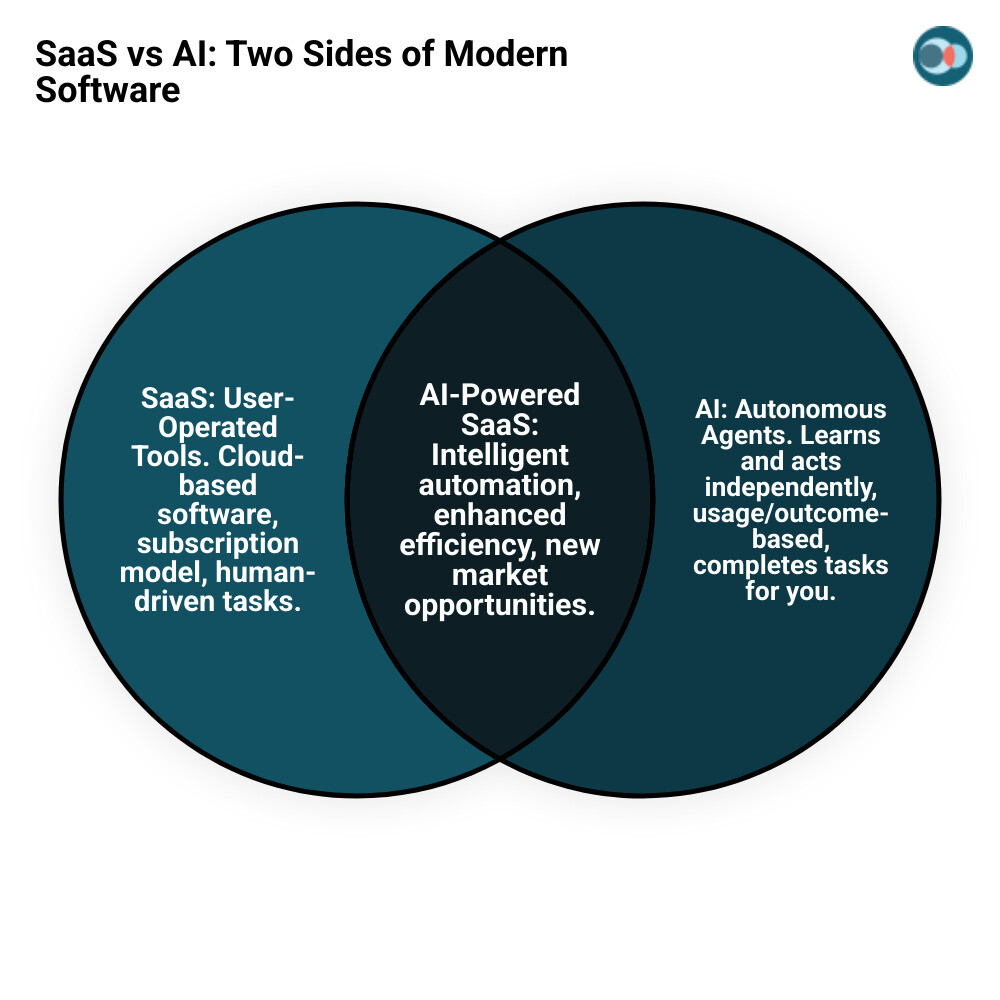
Advanced AI Agents vs. Traditional SaaS: Revolutionizing Business Solutions
Estimated reading time: 7 minutes
Key Takeaways
- **Advanced AI Agents** offer autonomous task management compared to **Traditional SaaS** which relies on manual input.
- The adaptability of AI agents leads to **greater efficiency** in various workflows.
- Businesses may experience **significant long-term savings** by transitioning to advanced AI solutions.
- **Scalability** is a major strength for AI agents, allowing them to adjust to business demands seamlessly.
- Success with AI agents requires addressing implementation challenges and investing in training.
Table of contents
- Understanding the Basics: Advanced AI Agents and Traditional SaaS
- Key Differences: Functionality and Learning Capabilities
- Cost-Effectiveness: Analyzing Expense Over Time
- Scalability: Adjusting to Business Needs
- Customization: Tailored Solutions for Unique Needs
- Use Cases: Real-World Applications of AI Agents
- Challenges and Considerations: Implementing AI Successfully
- Conclusion: Embracing Advanced Solutions for Business Efficiency
- Call to Action: Explore Your Options for AI Implementation
In today’s fast-paced digital world, businesses rely heavily on technology to streamline operations and enhance productivity. As the technological landscape evolves, so too do the solutions available for small businesses and enterprises alike. One popular debate centers around Advanced AI Agents vs. Traditional SaaS. This blog post will explore how these two solutions differ and how businesses can benefit from understanding these distinctions.
Advanced AI agents represent a leap forward in digital solutions by offering smarter, adaptive, and more efficient operations. Meanwhile, traditional Software as a Service (SaaS) still plays a crucial role for many organizations. Understanding the differences can help businesses make informed decisions that align with their strategic goals.
Understanding the Basics: Advanced AI Agents and Traditional SaaS
What Are Advanced AI Agents?
**Advanced AI Agents** are intelligent systems designed to perform tasks autonomously. They imitate human decision-making processes, analyzing data, making choices, and executing actions without requiring constant human intervention. These agents are often seen as the next evolution in automation, capable of adapting to various workflows and enhancing operational efficiency. For more information, you can refer to our guide on intelligent agents in AI.
What Is Traditional SaaS?
Traditional SaaS refers to a software delivery model wherein applications are hosted in the cloud. Users access these applications via the internet, and the software is primarily designed to require manual input to initiate tasks. While traditional SaaS applications have proven valuable, they often lack the adaptive and autonomous features that advanced AI agents provide.
Digital Solutions in Business
Understanding these two concepts—Advanced AI Agents and Traditional SaaS—allows organizations to better navigate their options when seeking digital solutions. Both have their merits, but the right choice depends on a business’s specific needs and operational goals.
Key Differences: Functionality and Learning Capabilities
Functionality: Autonomy vs. Manual Input
One of the primary differences between advanced AI agents and traditional SaaS is their functionality.
- Advanced AI Agents: These agents manage tasks autonomously, which means they can operate continuously without manual initiation. This leads to greater efficiency as they provide round-the-clock service. For instance, an advanced AI agent can monitor network traffic and respond to security threats without waiting for a user to trigger the necessary actions.
– **Source**: source.
- Traditional SaaS: On the other hand, traditional SaaS typically requires a user to input commands or start processes manually. While these applications are user-friendly, their reliance on human operation can lead to delays and inefficiencies.
Learning Capabilities: Adaptive vs. Static
Another significant contrast lies in their learning capabilities:
- Advanced AI Agents: They possess dynamic learning capabilities, allowing them to adapt workflows as circumstances change. For example, if an AI agent is responsible for managing inventory, it can learn usage patterns and adjust orders in real-time, optimizing supply levels.
– **Source**: source.
- Traditional SaaS: These platforms often follow predetermined workflows, meaning they do not learn from previous interactions. This can hinder flexibility and efficiency in rapidly changing environments.
Cost-Effectiveness: Analyzing Expense Over Time
Cost Implications of Advanced AI Agents
When considering the cost-effectiveness of adopting advanced AI agents, it’s essential to recognize that while the initial investment may be high, the long-term savings can be substantial. By automating tasks that traditionally require manual labor, businesses can significantly cut operational costs.
- Implementation of AI Agents: While there may be initial costs tied to installation and training, the decrease in labor costs and mistakes can lead to a positive return on investment (ROI) over time.
ROI from Advanced AI Agents vs. Traditional SaaS
To illustrate the potential ROI from advanced AI agents, consider the following:
- Businesses that utilize AI agents for data analysis often save thousands in labor costs by eliminating the need for additional staff.
- Traditional SaaS applications may incur ongoing subscription fees without providing the same level of task automation, resulting in higher cumulative costs over time.
In a comparison of quarterly expenses, companies often find that AI agents outpace traditional SaaS in cost efficiency as time goes on.
Scalability: Adjusting to Business Needs
The Benefits of Scalability with Advanced AI Agents
Another area where advanced AI agents shine is scalability. These intelligent systems can rapidly adapt to increased workloads and organizational demands without necessitating a complete overhaul of existing systems.
- Real-World Example: A marketing agency that adopts an AI agent to handle its campaign management can quickly scale its operations in response to changes in client demand, functioning seamlessly as workload increases.
Limitations of Traditional SaaS in Scalability
Conversely, traditional SaaS platforms may struggle to keep up with growing organizations. These applications can often face performance bottlenecks as user numbers increase or as tasks become more complex, leading to service disruptions and user dissatisfaction.
Customization: Tailored Solutions for Unique Needs
Customization with Advanced AI Agents
One of the most significant advantages of advanced AI agents is their capacity for customization. These agents can be tailored to meet specific user needs and workflows, providing personalized solutions that enhance productivity.
- Dynamic Adaptation: For example, an advanced AI agent used in customer service can learn from interactions, refining its responses to better suit customer preferences and inquiries.
Comparison with Traditional SaaS
In comparison, traditional SaaS solutions often come with a set of standard features that may not fully align with a business’s unique requirements. Customization options may exist, but they can be limited and reliant on APIs. Consequently, businesses may find themselves constrained by the predefined capabilities of these platforms.
Use Cases: Real-World Applications of AI Agents
Use Cases for Small Businesses and Enterprises
Many small businesses and enterprises have successfully adopted advanced AI agents, demonstrating their potential across various sectors. Here are a few notable applications:
- Customer Service Automation: Companies are implementing AI agents to handle customer inquiries, delivering 24/7 support and significantly reducing response times.
- Data Analysis: Businesses use AI agents to automate data collection and analysis, allowing for quick insights and actionable strategies.
- Project Management: Some organizations employ AI agents to streamline project workflows, ensuring deadlines are met and resources are ingeniously allocated.
These examples showcase the versatility of AI agents in diverse environments, contributing to improved efficiency and innovation.
Challenges and Considerations: Implementing AI Successfully
Addressing Implementation Challenges
Although the advantages of advanced AI agents are numerous, businesses may face certain challenges during implementation:
- Integration Difficulties: AI agents might struggle to fit into existing systems, particularly if those systems were built without considering future automation requirements.
- Steep Learning Curve: The training required for staff to effectively interact with advanced AI agents can be significant. Businesses must allocate resources to ensure smooth integration.
- Transition Costs: Transitioning from traditional SaaS tools to advanced AI agents often incurs additional costs that need to be planned for comprehensively.
Strategies for Overcoming These Challenges
To effectively implement advanced AI agents, organizations should:
- Develop a Clear Transition Plan: Businesses can benefit from creating a roadmap that outlines the steps for integrating AI agents into existing workflows.
- Invest in Training: Ensuring that employees receive adequate training can minimize resistance to new systems and promote smoother adoption.
- Seek Expert Consultation: Businesses should consider enlisting specialist guidance to navigate the transition effectively.
By addressing potential challenges, organizations can leverage the advantages of advanced AI agents while minimizing disruptions.
Conclusion: Embracing Advanced Solutions for Business Efficiency
In conclusion, the shift from traditional SaaS to advanced AI agents presents numerous advantages for small businesses and enterprises. These intelligent systems offer improved functionality, cost-effectiveness, scalability, customization, and practical use cases that can revolutionize how organizations operate.
As technology continues to evolve, embracing innovative solutions becomes essential for enhancing operational efficiency. Businesses looking to thrive in this competitive landscape should seriously consider the benefits that advanced AI agents provide and assess how they might fit into their long-term strategies. For further insights, also check our piece on AI agents for working professionals.
Call to Action: Explore Your Options for AI Implementation
Are you ready to explore the potential of AI agents in your business? Consider reaching out for a consultation to learn how advanced AI solutions can streamline your operations and provide a competitive edge. To stay informed, check out our related articles on AI technology and SaaS solutions to further understand how these advancements can benefit your organization.
By delving into the differences between advanced AI agents and traditional SaaS, businesses can make more informed choices, positioning themselves favorably for success in the fast-evolving digital landscape.